











By the time Marcelo Gaia lifted the glittering dress and declared it a turning point, the room already knew. Champagne was flowing, Rococo sofas were occupied, and the crowd inside Mirror Palais’s new Manhattan showroom leaned in with the kind of attention usually reserved for a reveal. This was not just a party. It was a milestone.
For a generation of young women who dress for the moment, Mirror Palais has quietly become essential. The label’s slinky, hyper-feminine silhouettes have filled the space once occupied by the bandage dress—only now filtered through TikTok, private appointments, and a fluency in online desire. It is sexy without being obvious, revealing without collapsing into costume.
Gaia launched Mirror Palais in 2019 as a digital-first brand, releasing designs via preorder and producing only what customers committed to buy. The model was lean, reactive, and risky. One early hit—the now-mythic Fairy dress, a sheer confection of mesh and rhinestones—spread rapidly online in early 2021. Demand surged. Production faltered. Some customers waited months. Others were refunded. It was messy, public, and formative.
Rather than dulling the brand’s momentum, the episode clarified Gaia’s instincts. He designs, he listens, and then he commits—often to the harder, slower, more expensive choice. Fabrics matter here. Construction matters. Even when the garments barely seem to exist.
That insistence is part of what makes Mirror Palais distinct. In an era when fast fashion can replicate a silhouette in days, Gaia leans into what cannot be copied easily: materials, hand feel, and a certain studied restraint. Many of the brand’s textiles are deadstock, sourced through estate sales or while traveling abroad. Some pieces are produced in New York, others in India or China, but the throughline is quality—often to the frustration of anyone hoping for speed or discounts.
The clothes themselves are exercises in what Gaia calls “naked dressing.” Cropped tops that reveal just enough from the side. Floor-length gowns that skim the body with strategic lace or mesh. They are garments that rely on the wearer as much as the cut, amplifying confidence rather than disguising it. The body, in Gaia’s words, is what makes the garment.
That philosophy has found a natural audience among women under 30 who are deeply online and increasingly exacting. Celebrities have helped propel the brand—Olivia Rodrigo, Hailey Bieber, Kylie Jenner, Sabrina Carpenter, Dua Lipa—but Mirror Palais’s real engine is visibility paired with scarcity. You don’t stumble on it in a mall. You seek it out. You wait.
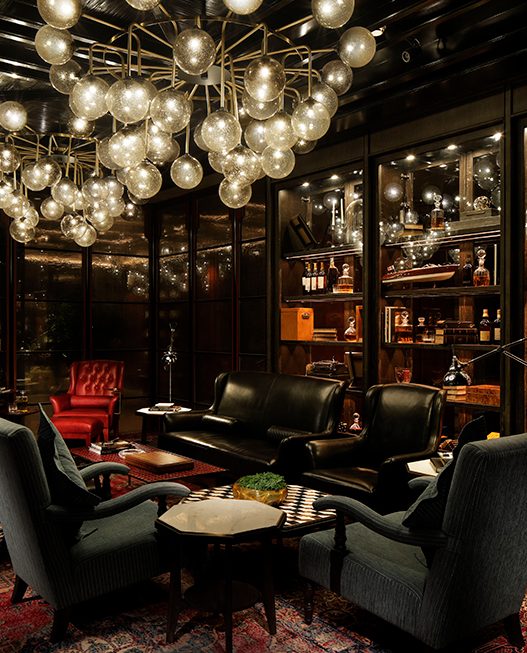
The showroom, the brand’s first physical space, makes that waiting tactile. Customers book private appointments to see the dresses up close, to feel the weight of a fabric that looks impossibly light on screen. The setting—French antiques, Victorian silhouettes, a kind of curated excess—mirrors the clothes themselves: romantic, deliberate, and unconcerned with minimalism for its own sake.
That attention to craft comes at a price. Most Mirror Palais dresses sit comfortably in the three-figure range, with some climbing higher. For a social-media audience accustomed to instant gratification, that sticker shock has consequences. Dupes proliferate. On TikTok Shop, cheap replicas rack up thousands of sales while the originals sell in dozens.
Gaia has been vocal about the issue, posting videos that compare silk to synthetics, even burning fabric scraps to make the point. It is not a performance of outrage so much as a statement of values. Fast fashion may win on volume, but Mirror Palais is not trying to compete there.
If anything, the knockoffs have sharpened Gaia’s resolve. He speaks openly about the trade-off: choosing better fabrics means slower growth, thinner margins, fewer wins on paper. But it also means integrity in the work. He would rather frustrate customers with scarcity than compromise on what makes the clothes feel special.
That conviction is beginning to open new doors. Mirror Palais has already been worn for weddings and milestone celebrations, and Gaia is openly interested in expanding into bridal. Big dresses. Expensive dresses. Dresses meant to be remembered.
In a fashion landscape driven by speed, Mirror Palais operates on discipline—of taste, of production, of desire. The brand does not rush to meet demand. It shapes it. And in doing so, it offers something increasingly rare: clothing that feels intentional in a world designed to move on immediately.
For those willing to wait, that restraint is the point.